Features
Everything it does, and what it deliberately doesn't
A wallet is a long list of small decisions. These are the ones you'll touch every day — each shown with a real screen from the app.
One row per asset
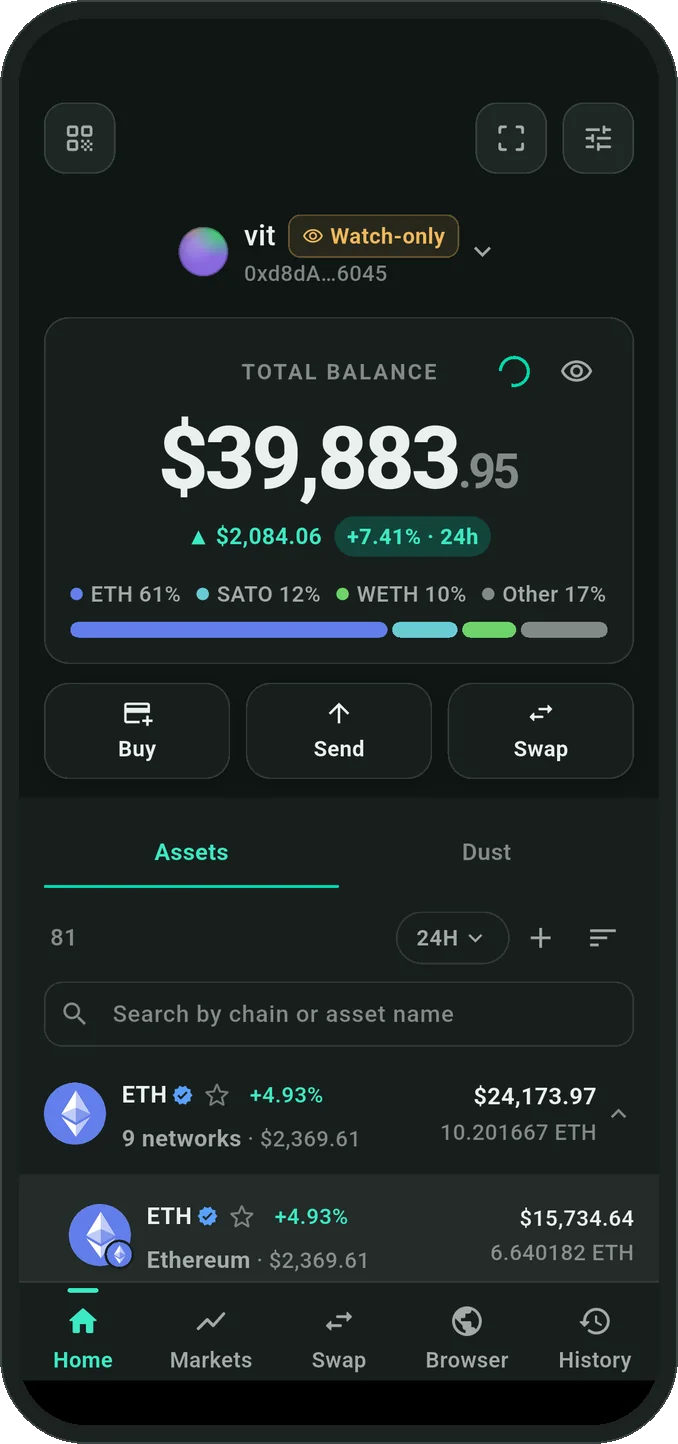
Every asset you hold gets a single row, and the chains it lives on sit one tap underneath. Your ether balance is one number — not eleven balances scattered across networks you have to sum yourself.
This is the direct answer to “how much ether do I have”. The portfolio adds it up; the row shows you where it is.
History that warns
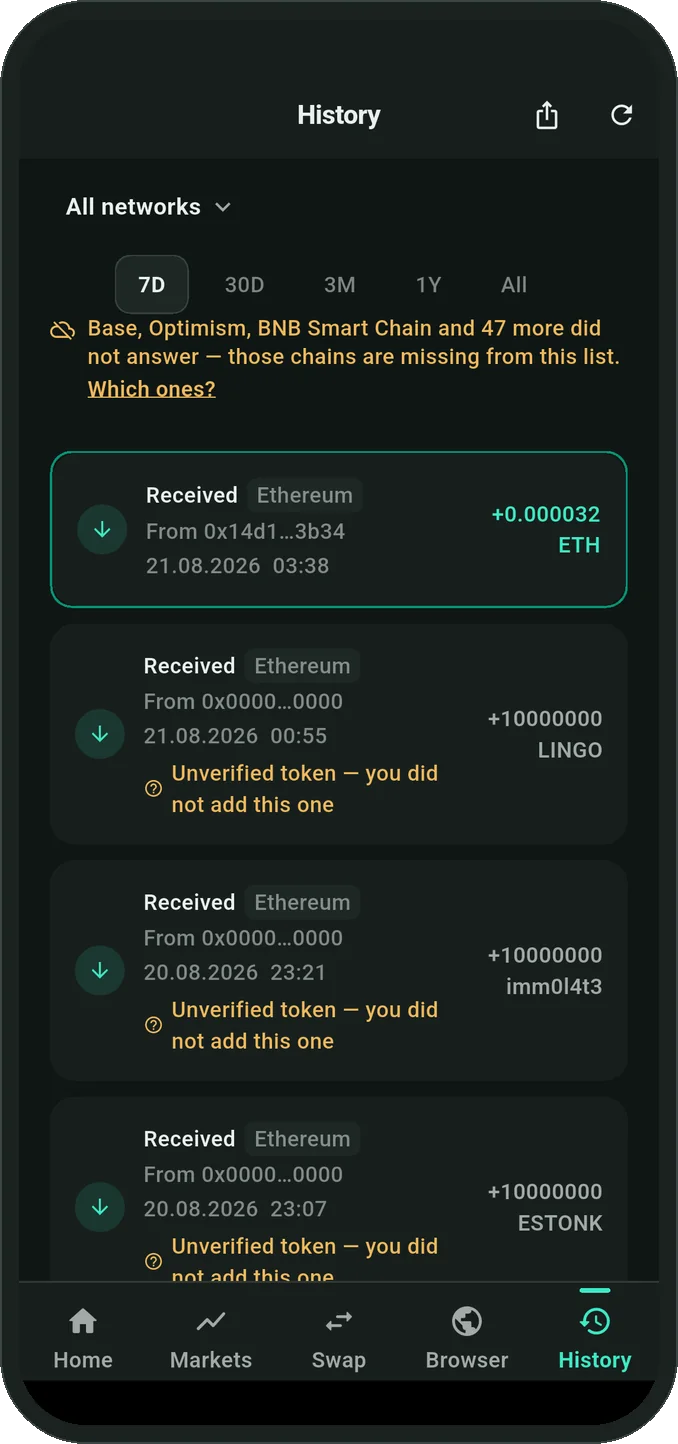
When a chain can't be reached, the history says so — by name — instead of silently skipping it. A gap you can see is better than a balance you can't trust.
Unverified tokens are flagged in place, so a fake airdrop can't pass itself off as a real holding. Verified assets carry a blue mark; everything else has to earn your attention.
Receive, per asset per chain
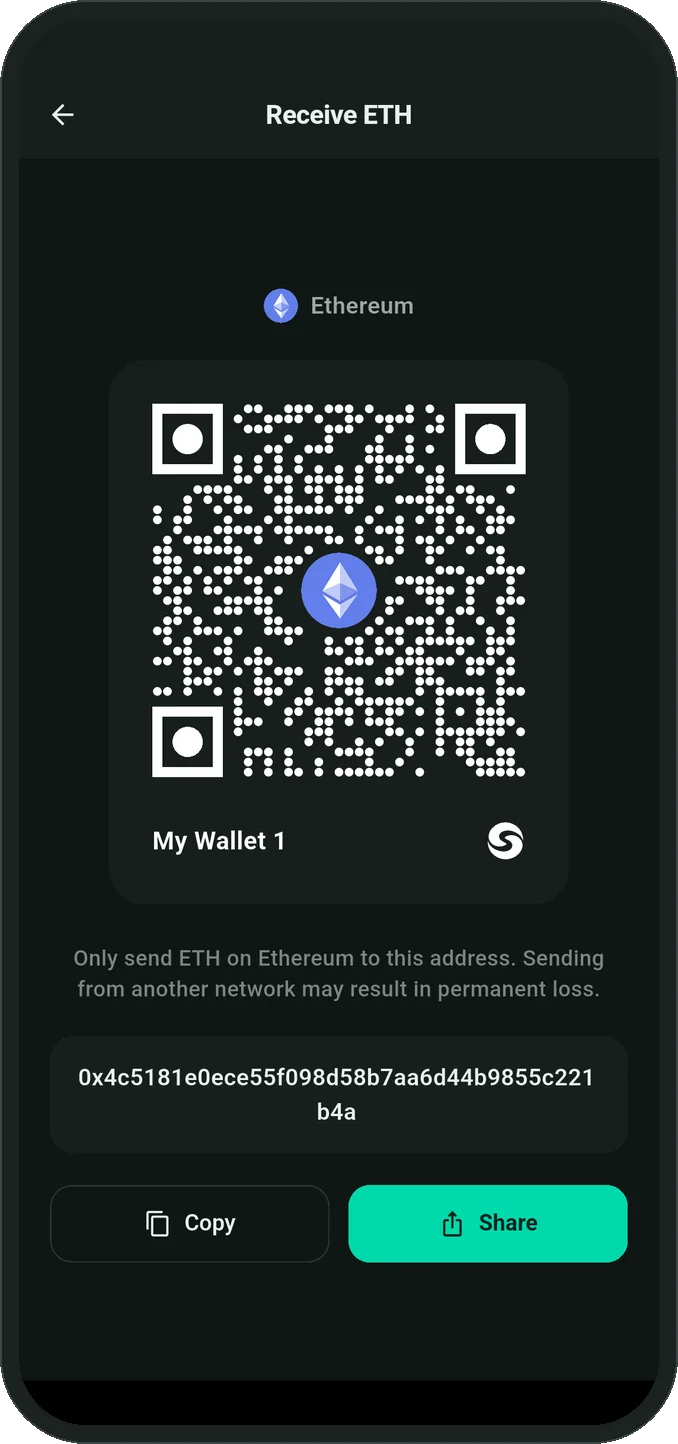
Receiving shows a row per asset-and-network pair, with a chain filter to narrow it down. You pick the pair; the app shows the address and QR for exactly that pair.
It works this way because “send me USDC” is not an instruction a wallet can safely act on — USDC exists on many chains, and the wrong one is a loss. The address you share is always the address you meant.
Markets without leaving
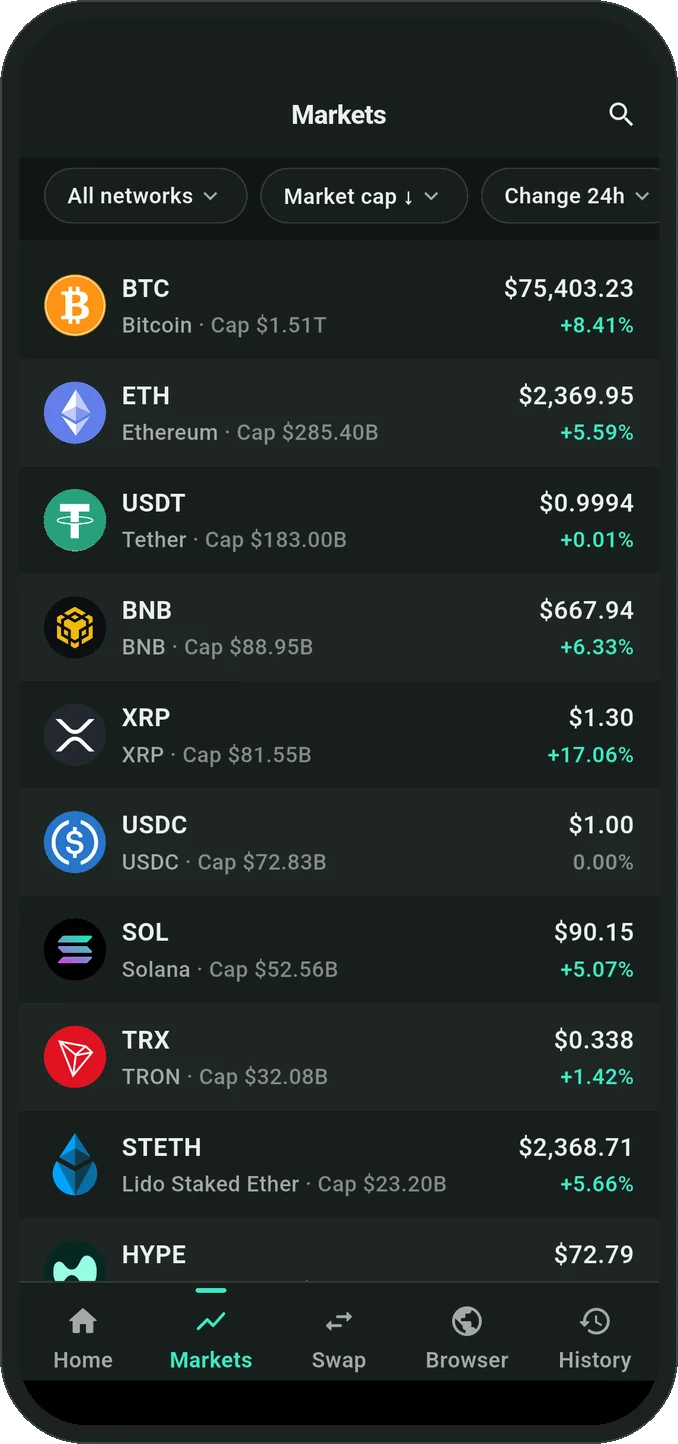
Prices, market cap, and 24-hour change for every supported asset, filterable by network. Enough to check before a trade without opening a browser tab.
Tapping an asset goes from market data straight to your balance on that chain — the number you saw is the thing you hold.
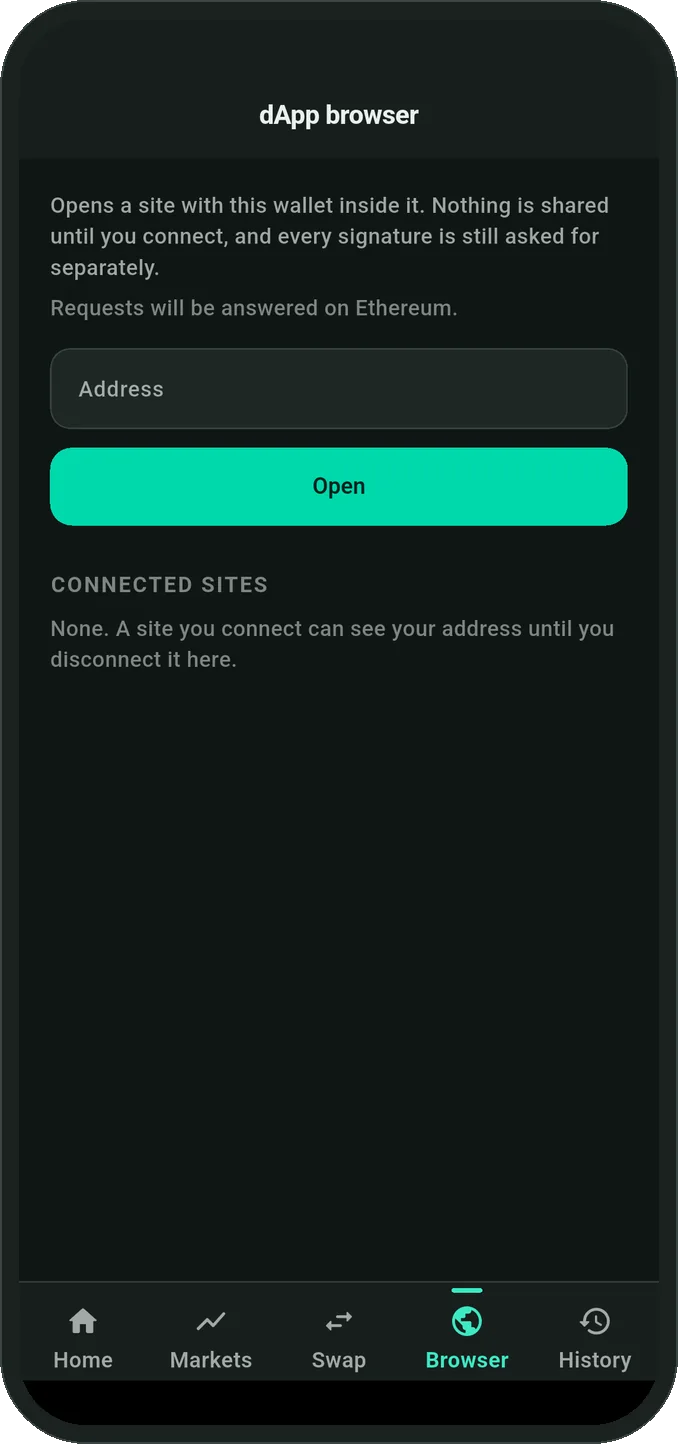
dApp browser, with the door closed first
Nothing is shared with a site until you connect. Every signature is asked for separately, connections are checked against phishing lists, and each site gets its own permissions you can review and revoke.
The review screen decodes calldata before you approve it, and WalletConnect is supported for everything the built-in browser doesn't cover.
Your own nodes, and a real test mode
If you run your own infrastructure, point Smartable at it: every chain accepts a custom RPC endpoint, and your node is used for reads and broadcasts.
Test mode is a hard boundary, not a filter. The five supported testnets replace the mainnets entirely — a test coin can never appear next to, or inside, your real balance.
Specification
- Custom RPC
- Per-chain endpoint override
- Testnets
- 5 supported networks
- Isolation
- Testnets replace mainnets
- Toggle
- One switch in Settings
The small utilities
Six quiet features that save you from yourself
ENS names resolved
Type a name instead of a hex address — Smartable resolves it and still shows the full address before you send.
Address book
Save the addresses you trust with a label, and pick from them instead of pasting.
Recipient history
Addresses you've sent to before are remembered, so a repeat payment is two taps, not a fresh copy-paste.
Spend limits
Cap how much can leave the wallet in a day. Everything above the cap needs a second confirmation.
Biometrics
Unlock with a PIN, fingerprint, or face — with unlock throttling that slows down repeated guesses.
Watch-only accounts
Track any address you don't hold keys for — a Ledger in a drawer, a cold wallet, a treasury — in the same portfolio.
What it deliberately doesn't
A shorter app is a safer app
No NFT gallery
Collectibles are hidden for now. We'd rather ship a good gallery later than a bad one today.
No perps or prediction markets
Leveraged trading and betting markets don't belong next to your savings, so they're not in the app.
No promoted actions
Nothing in the app is paid placement. The button the app earns on is never highlighted over the others.
No account, no email
There is no Smartable account to create and no inbox to leak. Your keys are generated on your device and stay there.
Try it on your own addresses
Every feature above is on from the first run. Not available to download yet.